
The Retail Music Research Report
What decades of research reveal about how in-store music shapes shopper behaviour: mood, time perception, tempo, volume, genre and music zoning, with the studies behind every finding.
Imagine walking into a store and hearing music that feels perfectly crafted for the space, not a random radio hit, but a carefully curated soundscape that subtly supports the store’s vibe. Your mood lifts, and without realising it, you start to slow down, browse more intentionally, and stay a little longer.
This is not accidental. Research has shown that thoughtfully chosen background music can have a powerful effect on shopper behaviour, from how long they stay, to what they buy, and how they feel during the experience. Decades of research confirm that music is not just background noise. It can subtly and powerfully shape how customers feel, how long they stay, and how much they buy. When the music is original, mood-matched, and designed specifically for the retail environment, the effects can be even more impactful.
In this report, we explore key findings on how in-store music influences shopper behaviour, from mood and time perception to purchasing patterns and “music zoning” strategies. We also share practical tips to help retailers of any size use purpose-built playlists to create a better customer experience and increase sales.
Key takeaways for retailers
- Music encourages longer visits. Simply having appropriate background music (versus silence) puts shoppers in a better mood and can increase dwell time significantly. One survey found 41% of shoppers spend more time in stores with suitable music, giving retailers more chance to showcase products and make sales.
- Slower tempo means more spending. Slow-paced music slows down shoppers. They stroll more leisurely, browse longer, and often make more impulse purchases. In a classic supermarket experiment, switching from fast to slow background music led to a near 38% jump in sales as shoppers spent more time in-store.
- Familiar hits can backfire. Counterintuitively, familiar hit songs can make time feel like it is dragging, while unfamiliar music tends to fade into the background, making shoppers feel more relaxed and willing to linger. One field study found that playing unfamiliar music kept customers browsing longer and even boosted sales by up to 9% compared to stores playing popular, well-known tracks.
- Match music to brand and shoppers. The genre and style of music should fit your store’s image and target demographic. Studies show sales improve when the music is congruent with the products: classical music in a wine shop led customers to buy pricier wines than when Top 40 pop played.
- Volume matters. Moderate volume is usually ideal for ambiance. Very loud music can energise shoppers in a high-energy store but often shortens visit length in other settings. Shoppers should never have to shout over the music.
- “Music zoning” boosts sales. A one-size-fits-all soundtrack no longer cuts it. Leading retailers use music zoning, tailoring playlists to different store areas or times of day, to cater to various customer groups simultaneously.
Why in-store music matters for the shopping experience
Music helps define a space’s personality and atmosphere. When chosen thoughtfully, it puts shoppers at ease, influences their emotions, and encourages them to linger. Studies show that stores playing music see more foot traffic, longer dwell times, and higher customer satisfaction than stores in silence. Silence can feel awkward or sterile, whereas well-matched music improves the ambiance and can subtly guide customer behaviour.
Simply having pleasant background music tends to put customers in a better mood, making them happier and more likely to return to the store. Music does not just fill the silence, it creates an emotional connection. When the music aligns with your brand and your customers’ taste, it makes people feel “at home” and even subconsciously bonds them to your store. A trendy apparel boutique might use upbeat, energetic tunes to convey a fun vibe, while a chic homeware store might play gentle indie or jazz to feel cosy and sophisticated. Shoppers often are not consciously aware of the background music, yet it can subliminally affect their mood and behaviour. Pleasant, on-brand music keeps them comfortable and engaged, and in that positive state, they tend to browse longer and spend more.
On the other hand, music that feels out of place (heavy rock in a fine-dining shop, for instance) or is too loud or fast can irritate customers, causing them to rush or leave sooner. The bottom line: the right music makes shoppers feel good in your store, which is the first step to getting them to stay and buy.

Familiar vs unfamiliar songs: surprising effects on time perception and sales
Intuitively, one might think playing everyone’s favourite hits would entice customers. Research has uncovered a counterintuitive effect: familiar music can actually make time feel like it is passing more slowly for shoppers, whereas unfamiliar songs tend to blend into the background and prevent shoppers from clock-watching.
In a field experiment, consumers were exposed to either well-known pop songs or more obscure, unfamiliar music while shopping. The results were striking: shoppers who heard familiar tunes believed they spent more time in the store than they really did, and many ended up cutting their visit short (about 8% shorter on average) compared to shoppers who heard unfamiliar songs. In contrast, those hearing unfamiliar background music did not pay much attention to it and perceived time as passing more quickly, which led them to unwittingly stay longer in the store.
Researchers explain that a favourite song can capture a shopper’s attention. When people mentally sing along to music they know well, part of their focus shifts to the song, making them more aware of time and less engrossed in shopping. This slight distraction or increased arousal can make the wait for a fitting room or the browsing time feel longer than it actually is. As a result, customers might speed up their shopping or decide to leave sooner than they would have if the music had simply faded into the ambiance.
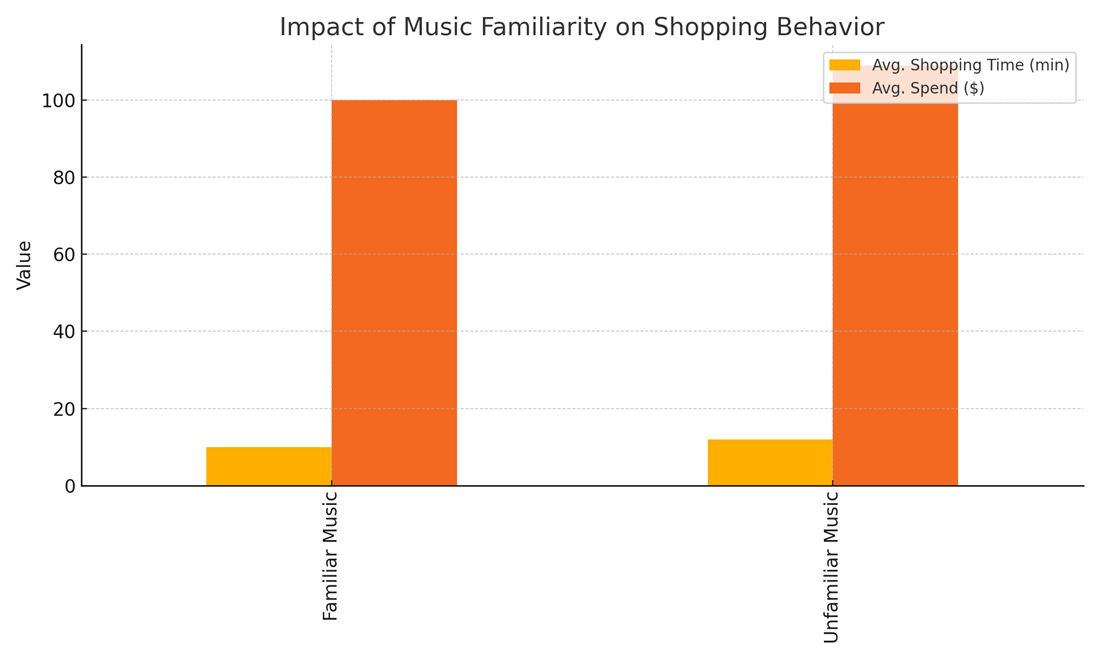
Shoppers stayed longer and spent more when unfamiliar music was played, leading to an observed roughly 9% higher sales compared to when familiar, popular songs were playing. Unfamiliar tunes tend to fade into the background, keeping customers in the store longer without them feeling impatient.
Tempo: fast or slow, setting the shopping pace
One of the most researched aspects of retail music is tempo, essentially, how fast or slow the music is. Music tempo has a direct impact on the pace of shopping. Classic research by marketing professor Ronald Milliman demonstrated that in a supermarket, fast-tempo music sped up customers’ walking pace, while slow-tempo music caused shoppers to slow down and linger longer. When upbeat, fast music was playing, people moved quickly through the aisles and spent less time looking at products, resulting in fewer unplanned purchases. In contrast, slower, more relaxed music had the opposite effect: customers unconsciously relaxed their pace, meandered through aisles, and spent more time examining items, which translated into higher sales.
In Milliman’s supermarket experiment, simply switching from fast background music to slow background music led to a significant increase in sales, shoppers bought more when the music was slower paced. In fact, sales revenues jumped nearly 38% on days with slow music compared to fast music in that study. The interpretation was that slower music encourages patrons to take their time, giving them more opportunity to pick up extra items. Fast music, on the other hand, injected a sense of urgency that got people in and out quickly, handy for convenience perhaps, but not great for encouraging browsing or impulse buys.
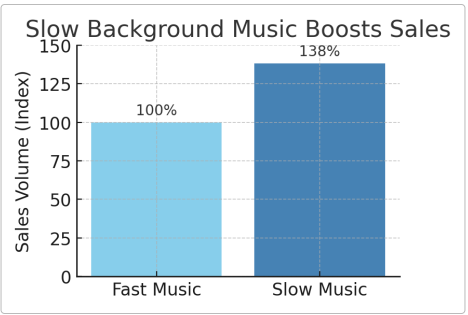
A field study in a supermarket found that slow background music caused shoppers to spend significantly more time in-store and led to higher sales volume, about 38% higher sales compared to when fast-paced music was played. Slower music relaxes customers and encourages leisurely browsing, resulting in more items purchased.
The takeaway for retailers is to choose tempo based on the desired shopping behaviour. If you run a store where you want customers to explore (a clothing boutique, bookstore, or grocery, for example), slower-tempo music can subtly encourage them to slow down, stay longer, and discover more products. On the other hand, if quick turnover is the goal (a fast-food outlet or the morning rush in a café), an upbeat tempo might nudge people to pick up the pace. Most retail environments benefit from a moderately slow tempo that encourages browsing. Faster music does not necessarily make people buy more, it often does the opposite by limiting browsing time. Customers usually do not realise the music’s effect on their pacing, they will ascribe their slower or faster shopping to their own preference or urgency, not the background beat.
Volume: finding the sweet spot
Besides tempo, volume is another critical factor in background music. The loudness of music helps set the mood and energy level, but it also directly affects shopper comfort and how long they will tolerate staying in the store. Striking the right volume is a balancing act: too quiet, and the store feels dead; too loud, and customers may feel overwhelmed or hurried.
Studies indicate that very loud music can create excitement in high-energy retail settings, like a busy apparel store aimed at young shoppers, but if the volume is inappropriate for the context it may shorten the time customers spend in the store. One early study found shoppers spent less time in a grocery store when loud music was playing compared to when soft music was playing. Loud, fast music can raise arousal levels, which might be useful to convey a vibrant atmosphere, but it often makes people feel like time is dragging or that the environment is chaotic, especially if they do not like the music. On the flip side, very soft music, or long stretches of silence, can make a space feel awkward or too library-like, reducing the energy.
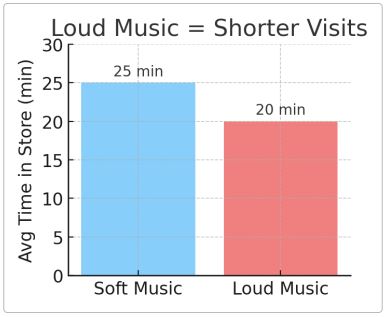
Research suggests loud music can shorten how long customers stay. In one study, shoppers lingered longer with soft background music but spent less time in-store when music was very loud. Loud music can create energy, but if overdone it may drive some shoppers away sooner.
The goal is a moderate volume that creates a pleasant ambiance and a sense of privacy, so shoppers are not self-conscious about being overheard, but not so loud that it impedes conversation. Customers should never have to shout over your music to ask a question or talk to a companion. The ideal volume can also depend on the type of store and time of day: a trendy fashion retailer at Saturday noon might get away with higher volume and high-energy tracks to create a buzz that attracts young shoppers, while a home décor shop or spa boutique should keep volumes low to invite strolling and contemplation. As a general guideline, if customers start raising their voices to communicate, the music is too loud.
Genre and musical style: matching music to your brand
Not all music affects shoppers the same way, what you play truly matters. The genre, style, and even cultural familiarity of the music should fit your target customers and the products you sell. Research shows that music congruent with the store’s image or merchandise can boost sales by creating a more immersive shopping experience. The right music acts like an extension of your brand’s personality, reinforcing to customers what your store is about. Playing the “wrong” genre, however, can create cognitive dissonance (imagine heavy metal in a baby clothes store) and potentially turn customers off.
A well-known field experiment in a wine shop illustrated genre effects dramatically. On some days the store played classical music, and on others it played contemporary Top 40 pop. The number of bottles customers purchased stayed about the same, but their choices differed. When classical music was playing, customers on average selected more expensive wines, whereas the days with pop music saw shoppers choosing cheaper bottles. The classical music created an upscale, sophisticated ambiance, subconsciously encouraging shoppers to treat themselves to a finer vintage, while the casual pop tunes did not evoke that luxury feel. In essence, the background music “framed” the product in a certain light: classical made the store seem high end, prompting premium purchases. This effect was on what shoppers bought more than how many, classical did not necessarily increase the total number of bottles sold, but it increased revenue by steering customers to higher-priced items.
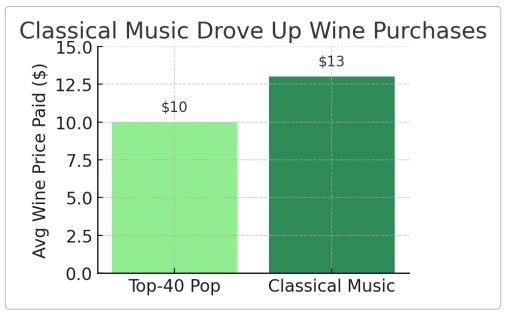
A study in a wine store found that playing classical music caused shoppers to buy more expensive wines than when Top 40 pop music was played. The upscale feel of classical tunes made customers subconsciously more inclined to splurge on premium bottles.
In other cases, researchers have shown that music which has a thematic link to products can sway buying decisions. In a store display of wines from different countries, French accordion music playing in the background led to more French wine being sold, whereas on a different day German folk music led to more German wine sold. Shoppers were not aware of the influence, when asked, most denied the music affected them and often even failed to recall what music was playing, yet sales data told the story: people gravitated toward the nationality of wine that matched the musical cues in the environment.
This underscores how subtle and powerful the congruence between music and merchandise can be. If you sell Italian gourmet food, some light Italian classical or contemporary Italian songs might foster the right mood. A sporty outdoor gear shop might lean on uptempo rock or indie folk that evokes adventure. Know your target audience and the vibe you want, and choose genres accordingly. When the music fits, customers feel more comfortable and engaged, and the research suggests this translates into better sales performance.
Be mindful, too, of music that could bother shoppers: songs with explicit lyrics, extremely aggressive styles, or jarringly out-of-place genres are generally risky. Unless your brand specifically calls for it, it is wise to avoid content that could offend or annoy. The goal is music that most of your shoppers will at least find pleasant or neutral. Neutral does not mean boring, it means it does not clash with expectations. You want music to elevate mood and complement the shopping experience, not steal the spotlight for itself.
“Music zoning”: tailoring sound to different store areas
Retailers with diverse customer segments or store departments have discovered the power of “music zoning”. This is the practice of dividing your store into zones, or using different playlists at different times, and curating the music in each zone to best fit the intended audience or product area. A one-size-fits-all approach to in-store music is outdated, often, what works for one section may not suit another. By matching music to each department’s shopper demographics, retailers can improve the experience and sales in each area simultaneously.
Research by Yalch and Spangenberg supports this approach. In a field experiment at a department store, they played different styles of background music in departments aimed at different age groups, essentially creating music “zones”, and observed the outcomes. The results were telling: departments where the music matched the target shoppers’ preferences saw more customers make purchases and they spent more money, compared to when a one-size-fits-all soundtrack was used across the whole store.
The study also found that music preferences and effects differed notably by age group, but not much by gender. Shoppers aged 25 to 49 tended to shop longer when contemporary, “foreground” music was playing, whereas older shoppers (50 and above) spent more time, and even spent more money, when softer, “background” music was played. In a clothing store with a juniors section and a seniors section, for example, the younger area might feature upbeat current hits, whereas the seniors’ area might play nostalgic classics or mellow instrumentals. Each group feels more “at home” with their respective soundtrack, potentially increasing their browsing time and satisfaction.
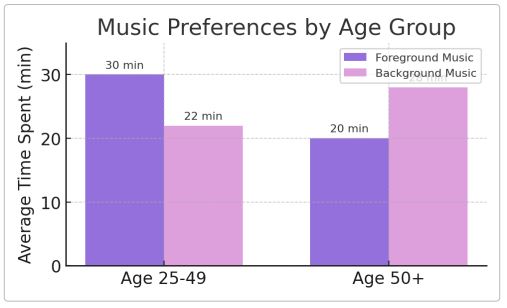
A field experiment on “music zoning” found that shoppers aged 25 to 49 spent longer and purchased more with energetic, foreground music, whereas shoppers aged 50 and above spent more time and money with mellow, background music. Each age group lingered longer when the music matched its preference.
Importantly, these effects held consistent regardless of whether people were shopping on a weekday versus a weekend, or shopping alone versus with someone, the alignment of music to shopper profile was the critical factor. Even small retailers can apply this principle by adjusting playlists during different dayparts, playing more youthful music in the evening when younger shoppers visit, and softer tunes in the morning when older shoppers might be more common. The key is to tailor your soundscape to match your audience in each context. In practice, this means reviewing your store layout and shopper demographics, and considering whether a single playlist is ideal for all areas. Many stores serve diverse audiences or have varied sections, men’s versus women’s fashion, or a café inside a bookstore, and using targeted music in each can elevate each space.
Putting it all together: best practices for in-store music
- Curate music to your brand and audience. Treat your playlist as part of your brand identity. Choose genres and songs that resonate with your target customers and the vibe of your store. If you have distinct shopper groups or departments, personalise the music for each zone to maximise each group’s comfort and engagement.
- Mind the tempo. Use slower tempo music during most shopping periods to encourage browsing. Save faster beats for when you actually need to speed things up, closing time or a high-traffic rush when quick decisions are okay.
- Set comfortable volume levels. Aim for a moderate volume that creates ambiance but still allows conversation. Test your volume at different spots in the store. Match volume to store energy: lively environments can sustain a bit louder music, while upscale or intimate settings call for softer sound.
- Be careful when playing only hit songs. Do not only play big hits on repeat, too many recognisable tunes can distract shoppers and make them more aware of time passing. Balance your playlist with pleasing but lesser-known songs or instrumental versions.
- Keep playlists fresh. Update your in-store playlists regularly so the music does not become stale for repeat visitors or your employees. Many successful retailers refresh their music selections weekly or monthly, and adjust seasonally.
- Observe and experiment. Treat your music strategy as an ongoing experiment. Consider running A/B tests: play one playlist on some days, another on others, and compare metrics like average transaction value, conversion rate, or time spent in-store. Ask floor staff what they notice, and even ask customers for their thoughts.
- Get the compliance right. Ensure you use a legal source for music and maintain good audio quality. Poor, tinny speakers or glitchy streaming can undermine the experience just as much as the wrong playlist.
By thoughtfully leveraging in-store music, retailers can create a more engaging and enjoyable atmosphere that subtly encourages shoppers to stay longer, feel happier, and spend more. The evidence is in: from mood to pace to purchase choices, the right music has a real impact on shopper behaviour. Music is a flexible and relatively inexpensive tool, one you can control and adapt as needed, that can turn your store’s playlist into a strategic asset: one that harmonises with your brand, delights your customers’ ears, and ultimately boosts your bottom line.
How Melodial puts the research to work
Melodial gives retailers a fully licensed, brand-matched catalogue with no OneMusic or collecting-society fees, so the music itself and the licence come in one subscription. Every track is clean, with no explicit lyrics, and playlists are built for commercial spaces rather than the charts, exactly the unfamiliar, on-brand sound the research favours.
A single store runs on Melodial Basic (one stream, from A$9.99/month or A$99/year). Multi-zone stores and chains use Melodial Plus at A$19.99/month per stream, so each zone, or daypart, is its own scheduled stream, making music zoning practical from one dashboard. Melodial Curated and Melodial Custom go further with a bespoke or fully original brand sound. Pricing varies by region; a Music Licence Certificate is included on every plan.
References
- Yalch, R.F. & Spangenberg, E.R. (1993). Using Store Music for Retail Zoning: A Field Experiment. Advances in Consumer Research, 20, 632-636.
- Yalch, R.F. & Spangenberg, E.R. (2000). The Effects of Music in a Retail Setting on Real and Perceived Shopping Times. Journal of Business Research.
- Milliman, R.E. (1982). Using Background Music to Affect the Behavior of Supermarket Shoppers. Journal of Marketing, 46(3), 86-91.
- Areni, C.S. & Kim, D. (1993). The Influence of Background Music on Shopping Behavior: Classical versus Top-Forty Music in a Wine Store. Advances in Consumer Research, 20, 336-340.
- Shopify (2023). Music in Retail Stores: How to Select Music for Your Business.
- RetailNext (2025). Music Matters: How In-Store Music Shapes Shopper Behavior.
Music and your licence, in one subscription.
Fully licensed background music for your business. Try it free for 14 days.
14-day free trial · No credit card required · Cancel anytime
Enter your code
We sent a 6-digit code to . It should arrive in a few seconds.